

Tragedy strikes when least expected, and people often react only after the fact. Most weather and disaster apps provide information such as forecasts, radar, and alerts, but they do not help people actively avoid danger. In moments of crisis, time and action tip the scales between life and death.
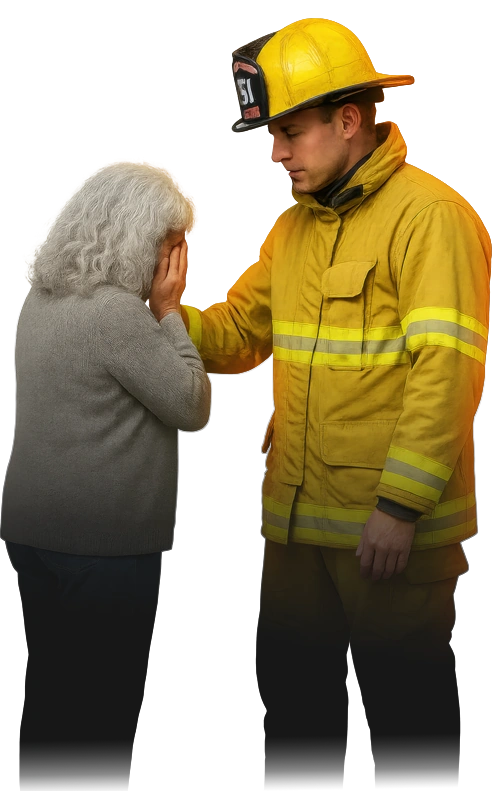
For me, the problem is personal. My father died tragically in a rural house fire. My mother was outside gardening when the fire began. By the time she tried to re-enter the house, it was already engulfed in flames. With no neighbors nearby, no landline, and no cellphone within reach, she was completely alone. She ran more than a mile on foot to seek help. By the time firefighters arrived, her husband, her home, and her sense of security were gone.
Years later, living in a region battered by tornadoes and flash floods, I saw the same patterns repeat. Families faced sudden, devastating tragedies without the means to prevent harm or save lives. Information alone does not save lives. Too many people cry out for help, and no one answers the call until it is too late.
Most state and local infrastructure, along with current technology, still react rather than prevent. Television news reports what has already happened. Phone apps either overwhelm users with irrelevant data or reduce everything to generic alerts. Both approaches attempt to inform people of danger, but neither gives the guidance they need to avoid it.

SafeSkies began with a single idea: in an emergency, information must turn into action. This core idea gave rise to four questions that reveal themselves in moments of crisis:
What and where is the threat?
How can I alert others and share what I know?
How can I avoid the immediate dangers in my path?
How do I protect myself and those I love to make it through this event?
Yet most existing platforms were never built to answer these questions. They overwhelm with data not directly relevant to the immediate threat, and important details are often buried, requiring too much effort to find when immediate action is required.
I designed SafeSkies around clarity, speed, and connection. Every screen, feature, and interaction pointed back to those four questions. From that foundation, I shaped a system built not for observation, but for survival.


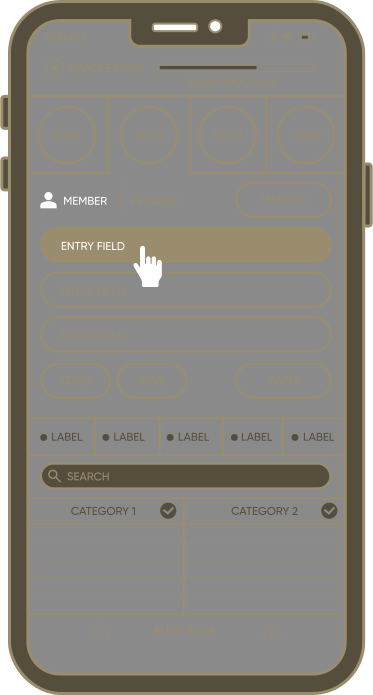


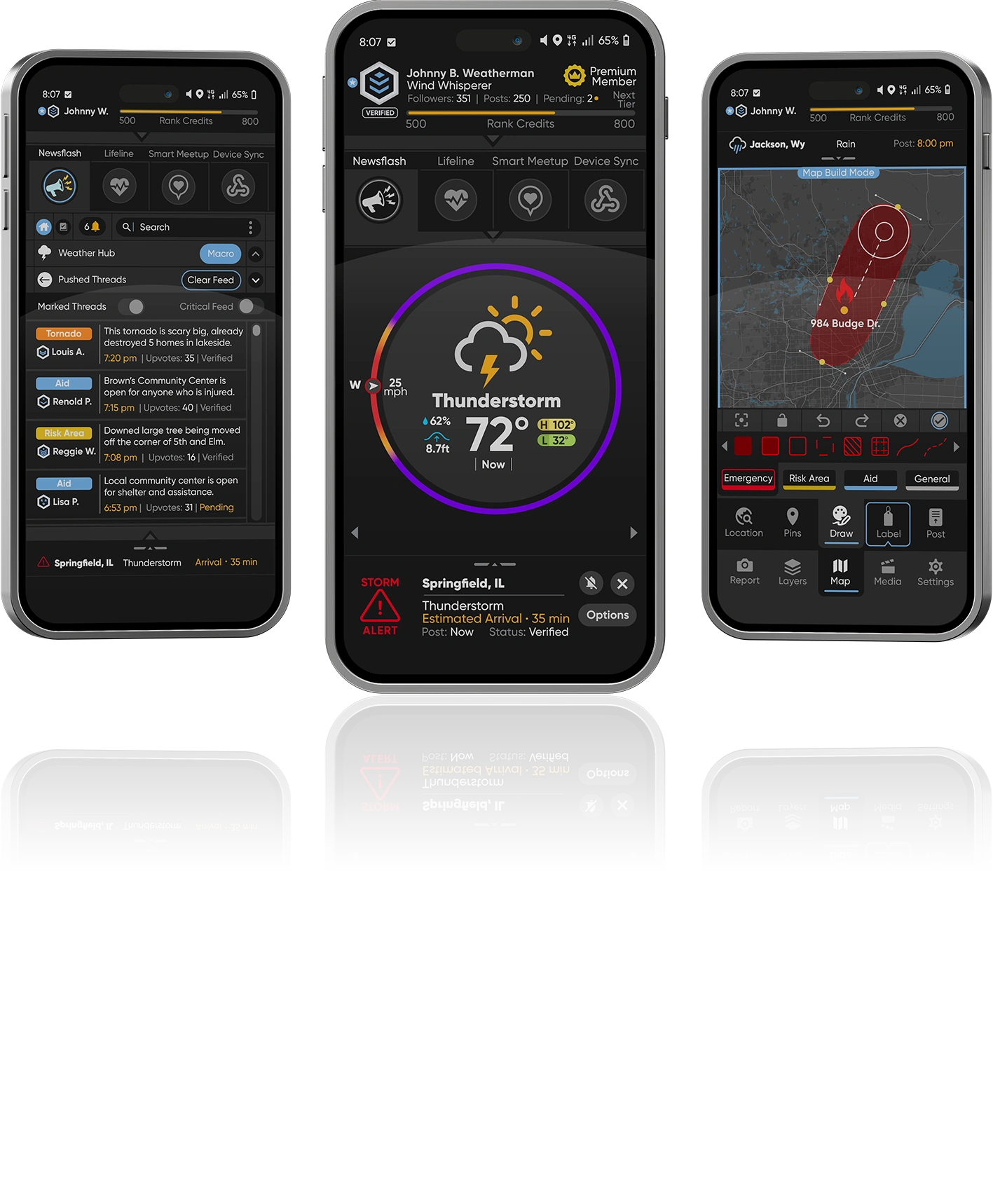
SafeSkies was built as a mobile-first platform for people under stress, where every second matters. The app:
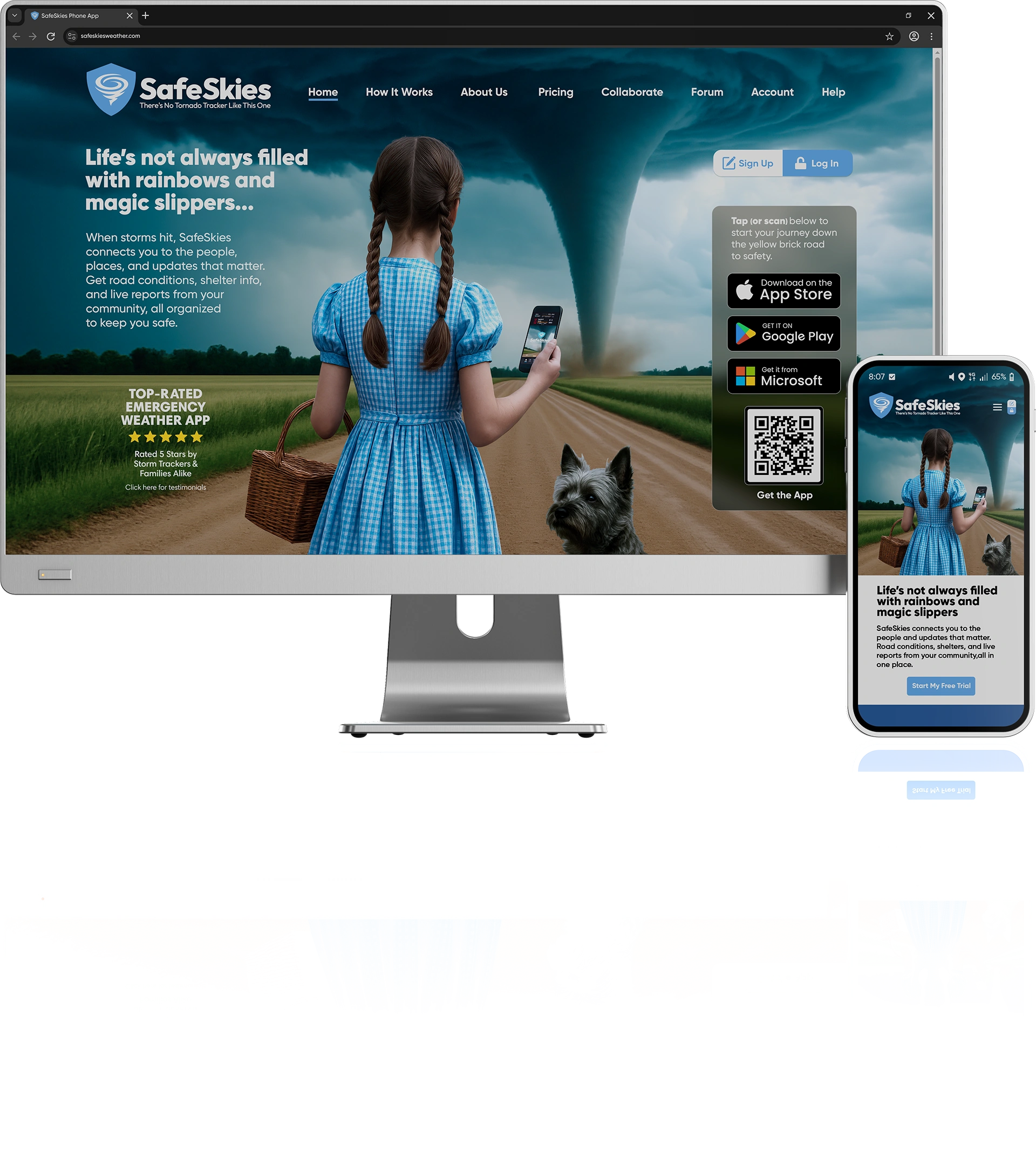
Beyond my mother’s personal tragedy, SafeSkies also drew inspiration from The Wizard of Oz. Dorothy’s abrupt displacement, disorientation, and helplessness in the face of disaster closely mirrored real life. Her search for a safe path home became the guiding principle of the app. But unlike Glinda’s ambiguous direction to follow yellow bricks, SafeSkies is designed to bring clarity in what could be a dark chapter in a person’s life.
SafeSkies delivers more than forecasts. It provides tools intended to empower people at their most vulnerable moments. The system is designed to reduce confusion, shorten decision paths, and promote calm action under pressure.
Whether during everyday storms or life-threatening disasters, every feature is built on the same principle: to give people the time and clarity my mother never had.